Inside Flex MOSAIC™
Discover how Flex MOSAIC is helping establish a common framework for understanding and advancing data center flexibility across the industry. Watch the overview video to see the vision behind the framework, explore the technical materials below for a deeper look at its structure and application, and read and sign the Open Letter to the Industry to join other industry collaborators working to advance this effort and help shape the future of data center flexibility.
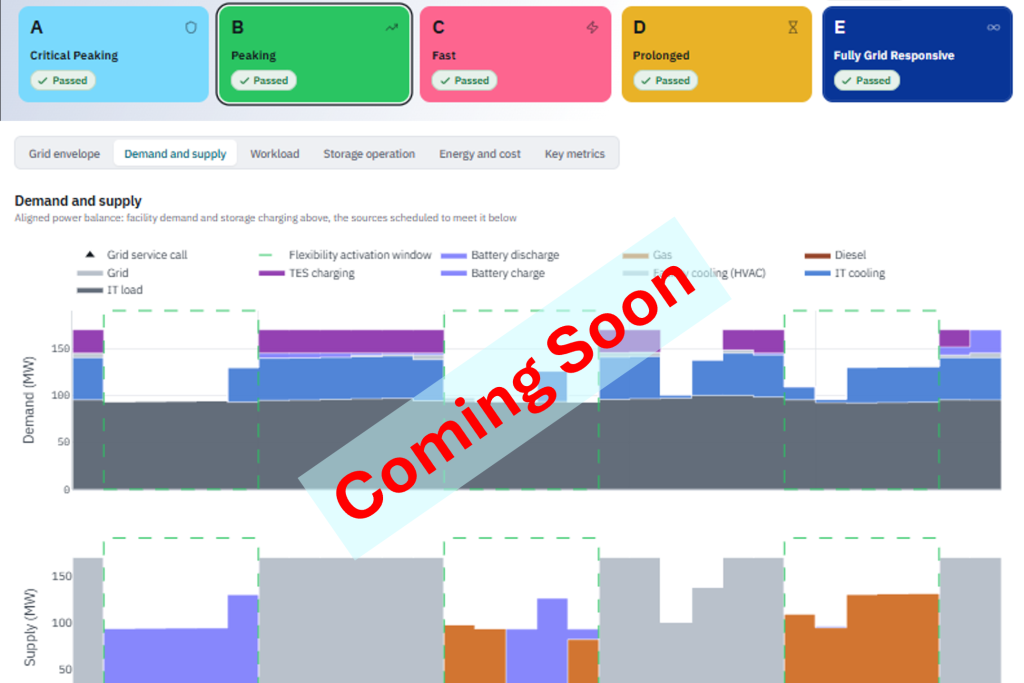
Flex MOSAIC™ in Action
Select a Role and Experience How Flex MOSAIC™ Works across Real-World Use Cases
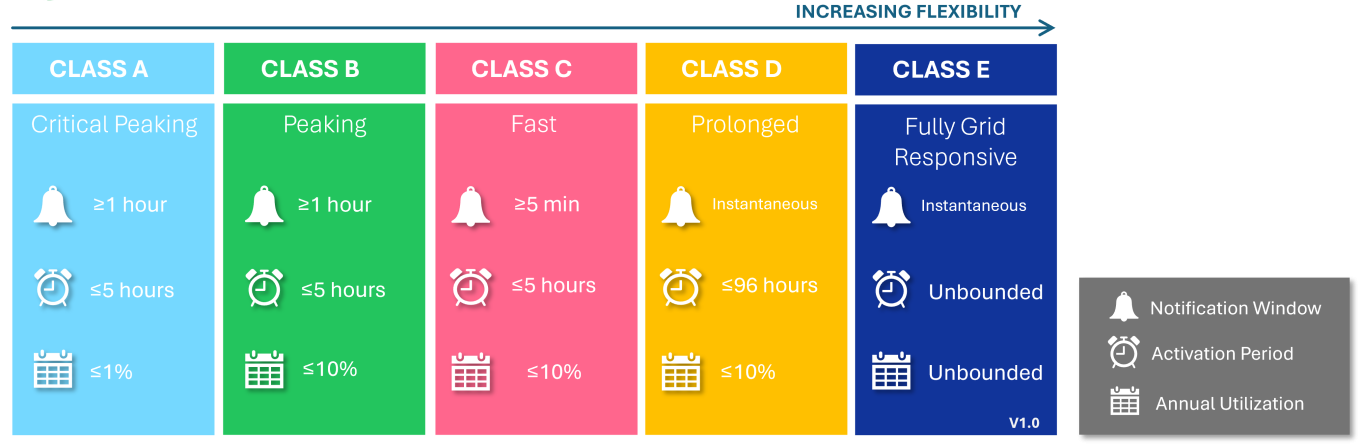
Explore the Flex MOSAIC™ Framework
Unlocking Grid Capacity Without Compromising Reliability and Affordability
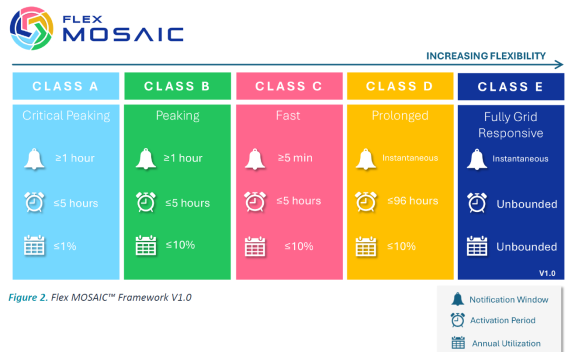
Flex MOSAIC: A Framework to Unlock Large Load Flexibility and Increase Speed to Power
See Flex MOSAIC™ from framework to application. Explore the Flex MOSAIC™ 101 white paper to understand the framework’s guiding principles and flexibility classes
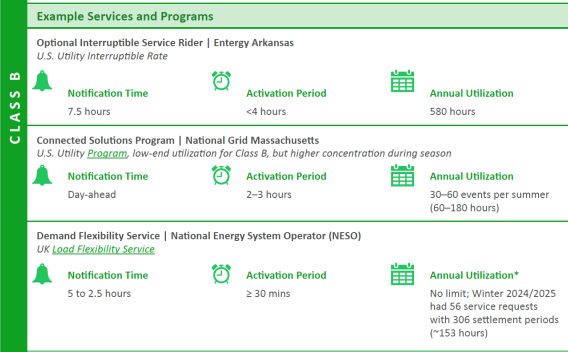
How Existing Programs and Services Fit Within Flex MOSAIC Classes
Learn how existing utility programs and wholesale market services map to the Flex MOSAIC™ classes, with examples demonstrating how the framework can be applied across different flexibility needs
Open Letter to the Industry
Help turn flexibility into a faster path to power. Read the Open Letter and join industry collaborators working to unlock capacity and accelerate large-load deployment
Technical Deep Dives
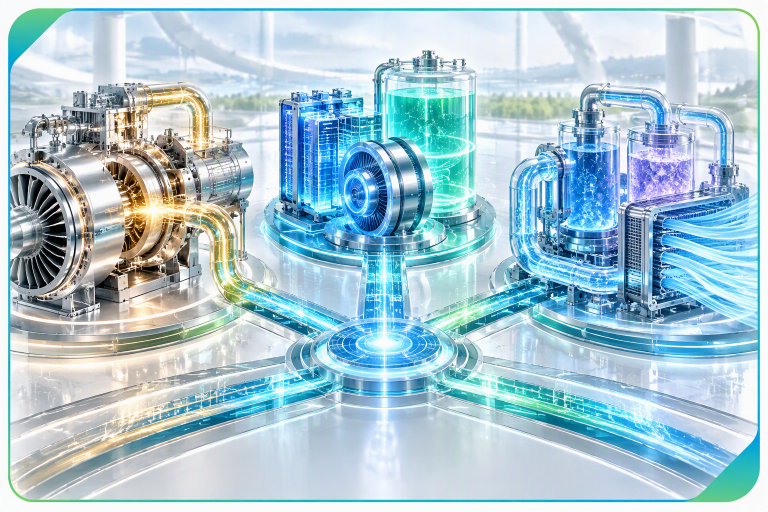
(Public) Designing for Flexibility: How Onsite Gen, Energy Storage, and Flexible Cooling Technologies Align With Different DC Flexibility Needs
This Quick Insight examines the design considerations involved in relating data center flexibility needs to onsite generation, electrical energy storage, flexible cooling, and thermal energy storage. Its scope uses the technology-neutral EPRI Flex MOSAIC™ classes A–E as a framework organized by notification, activation duration, and annual utilization requirements.

Data Center Cooling: Implications for Data Center Flexibility
Cooling systems account for 30–40% of data center load yet remain one of the least-utilized resources for grid flexibility today. This report evaluates how modern cooling architectures can provide dispatchable, demand flexibility without impacting data center information technology equipment’s reliability and operation. Findings show that ride-through can be extended from seconds to tens of minutes or more through thermal mass, precooling, setpoint relaxation, and thermal energy storage (TES). Case studies demonstrate practical strategies such as precooling, fan/pump turndown, cold TES, adsorption cooling, and free-cooling time-shifting. Interviews with Schneider Electric and Vertiv highlight that cooling flexibility is most valuable when it accelerates interconnection, increases information technology capacity, or improves resilience. For DCFlex Initiative members, the report provides a framework for designing demonstrations that quantify shift, shed, and shape services and position cooling as an active grid-support asset.

Onsite Generation Options for Data Centers: Implications for Data Center Flexibility
Rapid growth in artificial intelligence and high-density digital workloads is driving unprecedented demand for new data center capacity, but grid interconnection delays and transmission constraints increasingly limit the ability to secure reliable power. As a result, onsite generation, ranging from uninterruptible power supply systems and emergency backup generators to peaking units, primary power, and bridging power, has become central to data center design. This report inventories onsite generation technologies, evaluates their flexibility potential, and maps each to EPRI’s Flex MOSAIC™ classification framework. The analysis shows how onsite generation assets can potentially accelerate speed-to-power, meet interconnection requirements, and provide grid-supportive services such as net-load reduction, reserves, and fast frequency response. The report provides a structured foundation for utilities, regulators, data center owners and builders, and other stakeholders to plan onsite generation that enhances both data center reliability and grid stability by providing flexibility.

Energy Storage Options for Data Center Flexibility: Aligning Energy Storage with Data Center Flexibility Needs
This report surveys the landscape of energy storage technologies applicable to data centers and evaluates their fit against EPRI’s Flex MOSAIC™ framework for characterizing large-load flexibility. It reviews electrochemical, mechanical, and thermal energy storage options, covering process descriptions, technology readiness, and key performance metrics. The report then maps these technologies against Flex MOSAIC’s five flexibility classes, identifying which storage types are best suited to each class’s notification, duration, and utilization requirements. The report shows that no single storage technology satisfies the full range of data center flexibility needs; instead, a layered architecture combining short-duration technologies for power quality and fault ride-through with long-duration technologies for prolonged capacity and resilience offers the most practical path forward. This report is intended to help EPRI’s DCFlex Initiative members evaluate energy storage options as part of a broader data center flexibility strategy.

Tech Performance Evaluation Report: INNIO Jenbacher Spark-Ignition Engines
This technical update reviews INNIO Jenbacher spark-ignition natural-gas engines for onsite generation at data centers and examines their relationship to EPRI’s DCFlex vision and Flex MOSAIC™ classification framework. It addresses primary generation, peaking, bridging generation while awaiting grid interconnection, emergency backup, and grid support applications. The scope includes product overviews, solution details, and previous deployments, with attention to the J620, J624, and J920 models. Emerging combined heat-and-power and hydrogen capabilities are also considered.
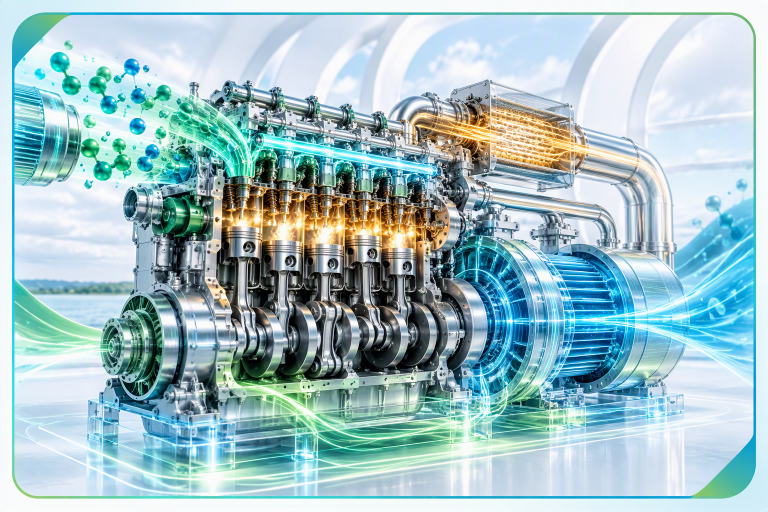
(Public) Tech In Focus: Jenbacher Spark-Ignition Engines
This Quick Insight provides an overview of Jenbacher J620, J624, and J920 spark-ignition engines for data center onsite generation. Its scope includes emergency backup, bridging, primary power, peaking, and combined heat-and-power applications, including data center cooling. The solution maturity discussion addresses natural-gas, biofuel, and hydrogen operation.